Scientific Classification
| Kingdom: Animalia |
| Phylum: Brachiopoda |
| Class: Rynchonellata |
| Order: Spiriferida |
| Family: Mucrospiriferidae |
| Genus: Mucrospirifer |
| Species: Mucrospirifer mucronatus (Conrad, 1841) |
Information
Geological Range
Paleogeographic Distribution
Stratigraphic Occurrences
References
Hall (1843) (as Delthyris mucronatus): p. 198.
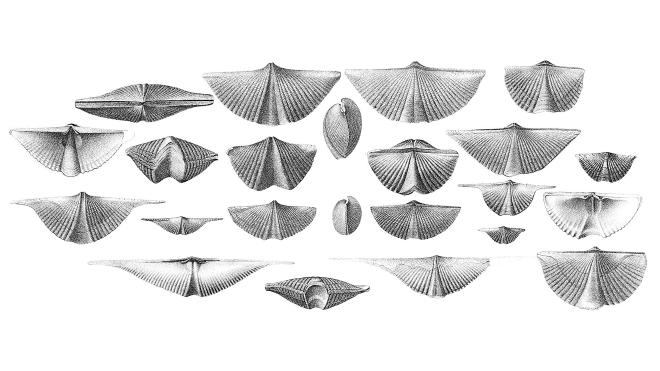
Hall (1867) (as Spirifera mucronata): p. 216, pl. 34.
Linsley, D., 1994: p. 205.
Wilson, K., 2014: pp. 114, 115.
Remarks
Originally described as Delthyris mucronata by Conrad in 1841. Recombined as Spirifera mucronata by Billings in 1861. Recombined as Mucrospirifer mucronatus by Grabau in 1931.
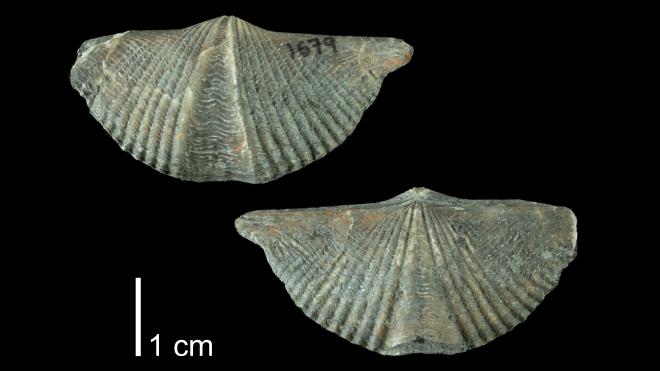
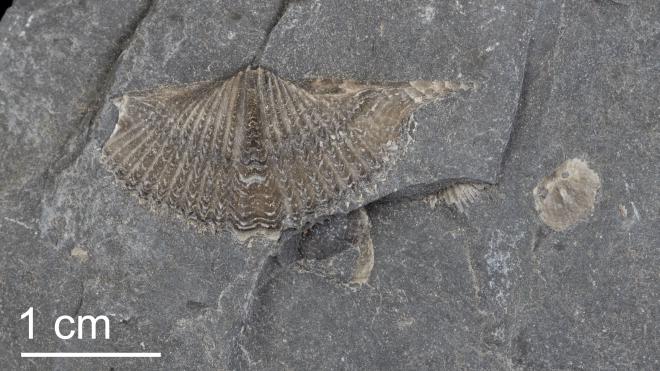
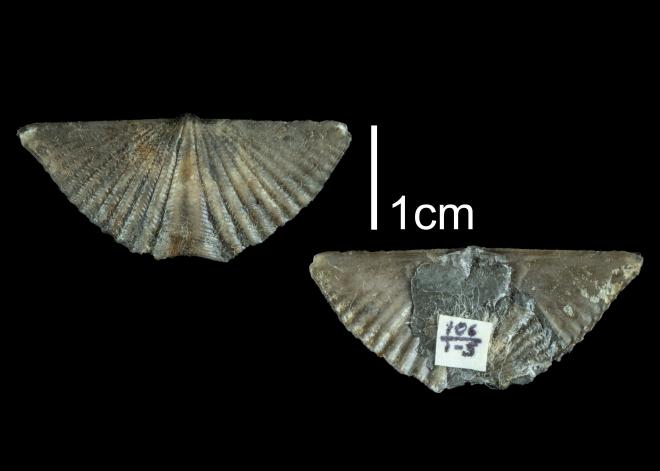
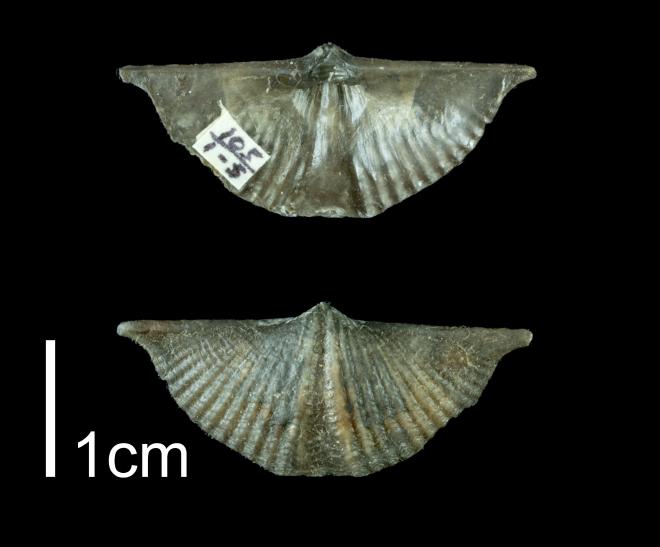
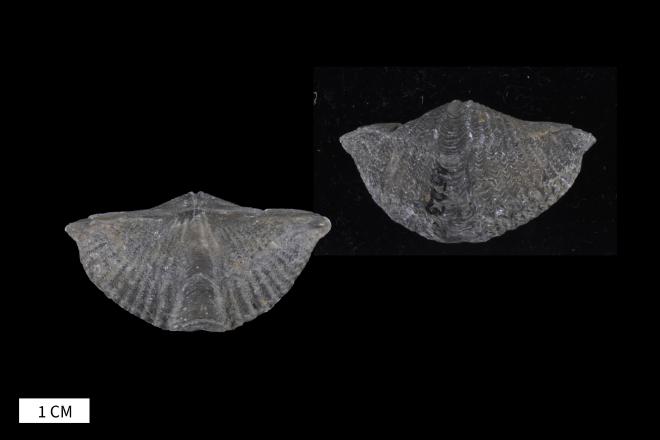
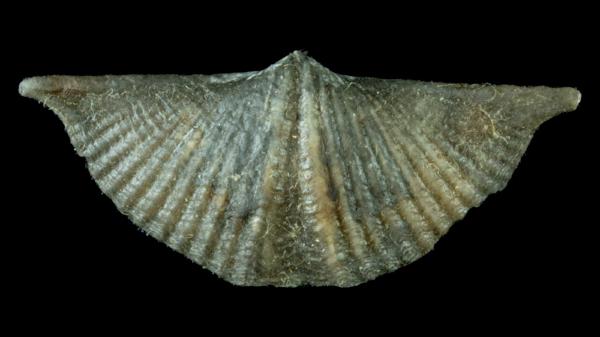
From Wilson (2014, p. 115): “Medium-sized shell, with hinge line extended, sometime into long mucronate projections. Cardinal area narrow. Both valves moderately convex, with well-marked sinus and fold. Surface with distinct striae and growth lines. To 20-50 mm.”
From Carlton Brett and Gordon Baird: “Mucrospirifer mucronatus (formerly Spirifer pennatus) is a flagship species of the Hamilton Group and the Hamilton fauna. It is very widespread in the eastern Appalachian Basin and is one of the most abundant brachiopods in the Appalachian Basin silciciclastic facies as well as western calcareous shales. Very similar morphotypes assigned to more than six species occur in the Michigan Basin; some appear very close to M. mucronatus and these need to be carefully reviewed. The very alate and elongate Mucrospirifer arkonensis in the Arkona-Plum Brook Shale are probably a distinct species as is stout M.thedfordensis in the Widder beds in Ontario. Both morphotypes are very rarely seen in New York in the upper Skaneateles and lower Ludlowville formations.”
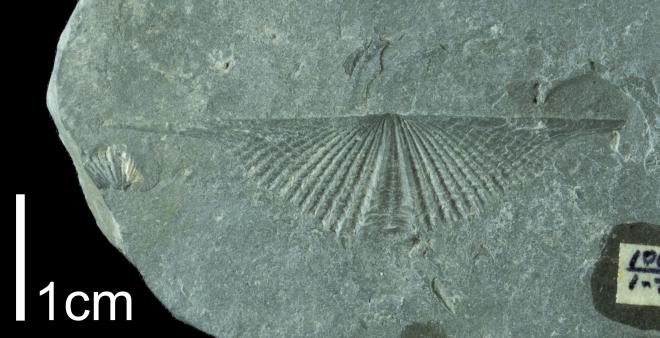
From (G.Kloc personal comm): “It is uncommon in pure carbonate facies of the mid-continent. Although there are older analogous elongate brachiopods in the Eifelian e.g., Alatiformia, Mucrospirifer. Appears to be among the new incursion from the Old World Realm that comes in with the Hamilton fauna together with Tropidoleptus and other immigrants.; M. mucronatus and allied species are noted, and named, for their elongate alae forms. Alae or skis up to 2 cm beyond the main shell and extend the hingeline. These alae are widely regarded as a ski-like adaptation for soft substrates and these brachiopods were undoubtedly capable of thriving in higher sedimentation, soft muds or silt substrates. They dominate in assemblages with abundant chonetids, Tropidoleptus and bivalves that seem similarly adapted for soft substrates and rather high sedimentation rates. That said, the Mucrospirifer, often less mucronate can also be common in calcareous mudstones like the Silica Shale and Genshaw Formation in the Michigan Basin. These brachiopods are less common in the Marcellus subgroup but become very abundant in the Skaneateles and Ludlowville formations. Mediospirifer is often more common in the Moscow Formation. The youngest members of the species are rare specimens from the Tully Formation eastern clastics.”
Online Resources
Global Biodiversity Information Facility.
Media
Images